Showing posts with label Ming. Show all posts

2020-10-25

Interactive Map of Zhèng Hé's Voyages

 Here is the map:

https://www.google.com/maps/d/u/0/embed?mid=1wqErluFzbfedCO6-fycEU6BiF-RxFXTM&ll=18.445497130535895%2C68.25884166406253&z=4


from this site. Enjoy!

2020-04-30

Encyclopaedia of Historiography

The Encyclopaedia of Historiography by French academic publisher INALCO is freely available on-line (but not off-line) here.

It features many articles about East Asia of interest to referees and players of The Celestial Empire, inter alia:
  • East Asian Monetary History
  • Biographies of Buddhist Monks and Nuns
  • Sources for the History of Taoism
  • Chinese Imperial Capitals (The)
  • Codes and Legal Works in China
  • Historical and Institutional Encyclopaedias (zhengshu)
  • Travel Books (The) (China)
  • Chinese Cartography
  • Matteo Ricci’s World Map (The) (1602)
  • “Accounts of the Eastern Barbarians” in Chinese Official Dynastic Histories
  • Koryŏsa 高麗史 고려사 : the Official History of the Koryŏ Kingdom
  • Yongjae Ch’onghwa 慵齋叢話 (Yongjae Narratives)
  • Chronicle of the Voyage of Nosongdang to Japan
  • Instructions of the Keian Era (The)
  • Japanese Documents from the Edo Period relating to the Imjin War
  • Cao Bằng: Sources for the History of a Borderland in Vietnam before the 20th Century

2018-06-19

The Purple Maiden

the Purple Maiden
The Purple Maiden (Zǐgū 紫姑) is a minor deity of Chinese Folk Religion mostly worshipped by women via a very peculiar possession cult: instead of possessing a medium, the Purple Maiden takes possession of her effigy during the night of her festival (the 15th day of the 1st month).

The effigy is thus swayed in various directions by the weight of the possessing deity; the movements of the effigy are then interpreted by the Ritual Master / Shaman / Spirit-Medium to divine about the prospects of the coming year in terms of silk output, or any other women-related produce.

As with most Chinese Folk Religion deities, the Purple Maiden is an apotheosised mortal. She was a concubine killed by the jealous wife of her master, close to the pigsty or to the latrine of the household. This is why her cult takes place next to the pigsty or latrine. An alternate (and possibly truer) hypothesis is that the stinking parts of the household were deemed inhabited by malevolent spirits, and a tale was fabricated to create a benevolent spirit guarding said parts of the household.

Whatever the truth, the cult of the Purple Maiden has been popular since the Táng dynasty. Under the Sòng, Zǐgū can be called upon even outside of her festival night via a small doll made of chopsticks and wicker, and animated by children. The doll traces lines on the ground, which are then interpreted for divination. This is probably the first instance of fújī (spirit-writing, see p94 of The Celestial Empire), the divination technique that became so popular from the Sòng dynasty on.

2017-01-12

Wōkòu Mythbusting

A great article available here that busts several myths about the Wōkòu, the notorious Japanese pirates that terrorised Korean and Chinese coastal areas under the Míng.

倭寇 (Wōkòu)

Myth 1. Hǎijìn (海禁, lit. 'Sea ban') or maritime trade prohibition constituted the Wōkòu phenomenon
Myth 2. Poor Chinese coastal inhabitants were forced into piracy by oppressive Hǎijìn policy
Myth 3. Wōkòu were primarily swordsmen
Myth 4. Japanese Yumi is weaker/has lower draw weight than English longbow (or other bows)
Myth 5: Lángxiǎn (狼筅) was developed to specifically counter Japanese swords

2016-11-22

Walled Villages

During the Míng and Qīng dynasties, the shores of the southern Chinese provinces suffered from pirate attacks (the notorious Wōkòu — see an older post). As a result, some coastal villages built walls against them.

Here are two interesting articles about these walled villages (1) and (2).

2016-02-23

The Role of the Chinese Magistrate

I am re-reading The Chinese Gold Murders detective novel by Robert van Gulik. The postscript by the author gives insight as to the exact role of the magistrate in Imperial Chinese society. I believe it can be of great use to whomever wants to play a magistrate in a role-playing game set in Imperial China:

A feature all old Chinese detective stories had in common was that the role of detective was always played by the magistrate of the district where the crime occurred.

This official was in charge of the entire administration of the district under his jurisdiction, usually comprising one walled city and the countryside around it for fifty miles or so. The magistrate's duties were manifold. He was fully responsible for the collection of taxes, the registration of births, deaths and marriages, keeping up to date the land registration, the maintenance of the peace, etc., while as presiding judge of the local tribunal he was charged with the apprehension and punishing of criminals and the hearing of all civil and criminal cases. Since the magistrate thus supervised practically every phase of the daily life of the people, he is commonly referred to as the "father-and-mother official".

The magistrate was a permanently overworked official. He lived with his family in separate quarters right inside the compound of the tribunal, and as a rule spent his every waking hour upon his official duties.

The district magistrate was at the bottom of the colossal pyramidal structure of ancient Chinese government organisation. He had to report to the prefect, who supervised twenty or more districts. The prefect reported to the provincial governor, who was responsible for a dozen or so prefectures. The governor in his turn reported to the central authorities in the capital, with the emperor at the top.

Every citizen in the empire, whether rich or poor and regardless of his social background, could enter official life and become a district magistrate by passing the literary examinations. In this respect the Chinese system was already a rather democratic one at a time when Europe was still under feudal rule.

A magistrate's term of office was usually three years. Thereafter he was transferred to another district, to be in due time promoted to prefect. Promotion was selective, being based solely on actual performance; less gifted men often spent the greater part of their lives as district magistrates.

In exercising his general duties the magistrate was assisted by the permanent personnel of the tribunal, such as the constables, the scribes, the warden of the jail, the coroner, the guards and the runners. Those, however, only performed their routine duties. They were not concerned with the detection of crimes.

This task was performed by the magistrate himself, assisted by three or four trusted helpers; these he selected at the beginning of his career and they accompanied him to whatever post he went. These assistants were placed over the other personnel of the tribunal. They had no local connections and were therefore less liable to let themselves be influenced in their work by personal considerations. For the same reason it was a fixed rule that no official should ever be appointed magistrate in his own native district.

The present novel gives a general idea of ancient Chinese court procedure. When the court was in session, the judge sat behind the bench, with his assistants and the scribes standing by his side. The bench was a high table covered with a piece of red cloth that hung down in front to the floor of the raised dais.

The constables stood facing each other in front of the dais, in two rows on left and right. Both plaintiff and accused had to kneel between these two rows on the bare flagstones and remain so during the entire session. They had no lawyers to assist them, they might call no witnesses and their position was generally not an enviable one. The entire court procedure was in fact intended to act as a deterrent, impressing the people with the awful consequences of getting involved with the law. As a rule there were every day three sessions of the tribunal, in the morning, at noon and in the afternoon.

It was a fundamental principle of Chinese law that no criminal could be pronounced guilty unless he confessed to his crime. To prevent hardened criminals from escaping punishment by refusing to confess even when confronted with irrefutable evidence, the law allowed the application of legal severities, such as beating with whip and bamboo, and placing hands and ankles in screws. Next to these authorised means of torture magistrates often applied more severe kinds. If, however, an accused received permanent bodily harm or died under such severe torture, the magistrate and the entire personnel of his tribunal were punished, often with the extreme penalty. Most judges, therefore, depended more upon their shrewd psychological insight and their knowledge of their fellow men than on the application of severe torture.

All in all, the ancient Chinese system worked reasonably well. Sharp control by the higher authorities prevented excesses, and public opinion acted as another curb on wicked or irresponsible magistrates. Capital sentences had to be ratified by the throne and every accused could appeal to the higher judicial instances, going up as far as the emperor himself. Moreover, the magistrate was not allowed to interrogate the accused in private. All his hearings of a case, including the preliminary examination, had to be conducted in the public sessions of the tribunal. A careful record was kept of all proceedings and these reports had to be forwarded to the higher authorities for their inspection.

"Judge Dee" is one of the great ancient Chinese detectives. He was a historical person, one of the well-known statesmen of the Táng dynasty. His full name was Dí Rénjié, and he lived from A.D. 630 till 700. In his younger years, while serving as magistrate in the provinces, he acquired fame because of the many difficult criminal cases which he solved. It is chiefly because of his reputation as a detector of crimes that later Chinese fiction has made him the hero of a number of crime stories which have only very slight foundation in historical fact, if any.

Later he became a minister of the Imperial Court and through his wise counsels exercised a beneficial influence on affairs of state; it was because of his energetic protests that the Empress Wǔ, who was then in power, abandoned her plans to appoint to the throne a favourite instead of the rightful heir apparent.

In most Chinese detective novels the magistrate is at the same time engaged in the solving of three or more totally different cases. This interesting feature I have retained in the present novel, writing up the three plots so as to form one continuous story. In my opinion, Chinese crime novels in this respect are more realistic than ours. A district had quite a numerous population; it is only logical that often several criminal cases had to be dealt with at the same time.

I have adopted the custom of Chinese Míng writers to describe in their novels men and life as during the sixteenth century, although the scene of their stories is often laid several centuries earlier. The same applies to the illustrations, which reproduce customs and costumes of the Míng period rather than those of the Táng dynasty. Note that at that time the Chinese did not smoke, neither tobacco nor opium, and did not wear the pigtail– which was imposed on them only after A.D. 1644 by the Manchu conquerors. The men wore their hair long and done up in a topknot. Both outdoors and inside the house they wore caps.

2015-04-14

The Seven Causes For Repudiation

In Imperial China, according to the Táng Code, married men had seven criteria whereby they could repudiate their wife, called the Seven Outs (qīchū 七出):
1- barrenness (not giving birth to children)
2- lasciviousness
3- disobedience to her husband's parents
4- indulgence in gossip
5- thievish propensities
6- jealousy
7- a disfiguring illness

The Míng code added that a woman who hadn't any living relatives, however, could not be repudiated [that would have made her free of any male dominance, which is contrary to Confucian orthodox thought]. Neither could be repudiated a wife who had mourned three years for her husband's parents. Husbandly repudiation was also forbidden in the case of a husband who had become rich having been poor previous to and at the time of the marriage.

Needless to say, repudiation only worked one way: a woman could never require the marital relation be dissolved, no matter how miserable her life. Miserable women would routinely commit suicide instead, thereby shaming their husband who would lose face.

A man who had repudiated his wife without her falling in one of the seven criteria would have had to take her back, and he would have been punished by 80 strokes of beating with the heavy stick.

A woman who ran away from her home would be sold by the State if caught. If she had been married during her absence, she was sentenced to death by strangulation.

The laws were either identical or extremely similar in the other countries of the East Asian cultural sphere: Japan, Korea, and Vietnam.

Under the Qīng, the Code added the possibility of a mutual divorce. Here again, the asymmetry of the male and female positions in society was apparent by the fact that a divorced man could remarry, whereas a divorced woman could not. Another kind of divorce, and then under all dynasties, was the state-mandated annulment of marriage; it would be pronounced by a magistrate if either spouse had committed any of the following offences:
- murder
- adultery
- assault and battery upon an in-law

2014-12-01

Setting Your Game In The Ryūkyū Kingdom

The Ryūkyū Islands, which are today part of Japan, were a wealthy trading kingdom (the Ryūkyū Kingdom 琉球國) in the 16th century. The kingdom was nominally a tributary state of Míng Dynasty; however, following the Míng policy of ending sea voyages gradually put in place during the 15th century, and also due to the increased threat on maritime travel posed by the Wōkòu (倭寇), the Kingdom was de facto independent.

The archipelago has been united in the first half of the 15th century by Shàng Bāzhì (尚巴志), who is also the founder of the ruling Shàng Dynasty. The capital city is at Shuri (首里) on the largest island: Okinawa (沖縄).

The reign of Shàng Zhēn (尚眞, 1477–1526) is widely regarded as the golden age of the island kingdom.

Despite the presence of a ruling aristocratic class, the Ryūkyū Islands have an egalitarian society. In particular, no native Ryukyuan may ever be bound into slavery — all slaves on the islands have been bought from foreign traders, and are usually Chinese or Korean victims of coastal raids by the Wōkòu.

The upper nobility (who are the descendants of Chinese gentry families from Fújiàn who arrived in the 14th century) have Chinese-style names and are bilingual, Chinese and Ryukyuan; the rest of the population have local names and are monolingual. Ryukyuan is a language related to (but different from) Japanese.

The Ryukyuan religion is a mix of ancestor worship, nature worship (the Moon and the Sun), and shamanism. Due to Chinese and Japanese influence, Buddhism is making inroads; there are Japanese Buddhist missionaries from Kyōto on Okinawa, and they have built four temples.
Irrespective of the particular strand of religion, all celebrants are female; some of them are “druid”-like, some others more like Inner Asian shamans.
Spirits and magical creatures such as yāoguài (妖怪, see p112 of The Celestial Empire), dragons, guardian lions, and ghosts, are very present and of paramount importance in the local folklore.
There is also a big emphasis placed on the fabrication and the use of amulets, talismans, etc. Lóngmài (ley lines, see p85 of TCE) strongly influence Ryukyuan magical and religious practices.

The islands are covered with all manner of moist forest and other tropical and subtropical flora. There aren't any large predators; the only danger when travelling overland are venomous snakes.

Map of Okinawa

2014-11-16

Setting Your Game In Early 16th Century Japan

In the 15th century, the Japanese Empire is officially a tributary state of Míng China. In reality, Japan isn't ruled by its emperor, impoverished and restricted to a ceremonial role, but by its military commander-in-chief or shōgun (将軍). China does not hold any kind of real power over the shōgun either.

The office of shōgun stays within the Ashikaga clan. The Ashikaga shogunate is also called the Muromachi period of Japan because the shōgun resides in the Muromachi district of Kyōto (京都). The shogunate is a semi-hereditary position: upon the death of a shōgun, the male members of the clan fight or manoeuvre to obtain the title; each contender is supported by various other feudal clans who have an interest in his victory. In the second half of the 15th century, one of these succession contests escalates into a full-blown civil war, known as the Ōnin War, which ends in 1477 leaving Japan bled white and without a clear-cut winner.

In the early 16th century, even though Japan enjoys a relative period of peace after the hardships of the Ōnin War, the country is divided and is effectively experiencing a form of “low-intensity” feudal anarchy:
  • The direct rule of the Ashikaga clan is restricted to the half-ruined city of Kyōto itself, where the cousins Ashikaga Yoshitane and Ashikaga Yoshizumi are constantly vying for the shogunate, with the Hosokawa clan pulling the strings.
  • Because of the decline of the shogunate, the provinces are ruled by petty feudal lords called daimyō (大名), whose personal loyalty to the shōgun depends on the personal prestige of the latter, and who are constantly feuding amongst themselves.
  • Kaga Province has become a de facto independent republic under the Ikkō-shū (一向宗) sect of Pure Land Buddhism.
  • Kyōto is in a perpetual state of unrest, with barricades dividing the various districts of the city, whose allegiances are constantly shifting.
  • Because of the general lawlessness, travel by road is highly unsafe.
  • There are trade barriers between provinces, and the use of money loses ground in favour of barter.


Barricade fighting in Kyōto (1528)


Should the GM decide to set his game in early 16th century Japan, adventurers will have an easy time finding jobs as caravan guards, bodyguards, spies, assassins, etc.

With travel between provinces having become dangerous, roads are deserted, and supernatural creatures can reclaim the wilderness…

2014-07-02

A Fantastic Film And A New Sect

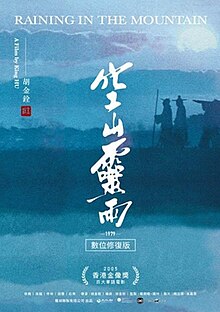
I needed a mental break from work the day before yesterday and so I watched one of my all-time favourite films, Raining In The Mountain (空山靈雨, 1979) by King Hu (Hú Jīnquán 胡金銓).

The film reminds me of those "behind closed doors" films, in which the action is restricted to a single room or locale — except that in this case the 'single locale' is a huuuuge maze-like monastery set in a remote mountainous area. The film was actually shot on location in South Korea. I wish I knew the name of the actual monastery because it is absolutely amazing.

The film is set in the Míng. The Three Treasures monastery keeps the only extant copy of a handwritten scroll penned by the famous Táng dynasty monk Xuánzàng, and two opposing parties of "adventurers" both try to steal the coveted treasure whilst the monks are themselves embroiled in a bitter succession struggle... I'd love to run this as a 2-GM, 2-party adventure, pitting each party against the other and both, simultaneously, against the monks who guard the treasure!

Anyway,  one of the minor protagonists of the story is the powerful lay master of a fictional Buddhist sect called the Vimalakīrti School*. He is fully dressed in Esoteric accoutrements and is constantly accompanied by a score female martial artists who act as his bodyguards. That's quite a cool NPC.

So here's the VIMALAKĪRTI SCHOOL for The Celestial Empire:

Period of Time
Míng

DESCRIPTION
Under the Míng, the state religion is Neo-Confucianism. The religious life of Buddhists turns increasingly towards isolated monasteries. It is hence difficult for lay practitioners interested in Buddhism, especially anybody with official duties, to be seen in the company of Buddhist priests or monks. As a result, Buddhist schools for laypeople start appearing. The Vimalakīrti School, named after the highly influential Indian lay practitioner Vimalakīrti, is one such school — albeit a fictional one.

MEMBERS
The Vimalakīrti School appeals to well-to-do, and usually aged, lay practitioners of Buddhism: mandarins, wealthy merchants, high-level officers. It also attracts nubile young women, recruited to serve as bodyguards for the most high-ranking members of the sect.

REQUISITES
Male Members
Allied with Buddhism or with Esoteric Buddhism. Allegiance score at least 60.
Age must be at least 45.
Status must be at least 55%
Wealth must be at least Affluent.
Female Members
Allied with Buddhism or with Esoteric Buddhism. Allegiance score at least 40.
Age must be 21 at the most.
Climb at 40% at least.
Sleeve Combat at 50% at least.
Stealth at 35% at least.

BENEFITS
Male Members
Male members enjoy the usual benefits of a high profile secret society (connections, relationships, e.g. a network of guānxi). They will always find a place to stay (or to hide!) in the monasteries that sponsor the sect, even if they call unannounced.
Female Members
Female members are taught all the powers pertaining to the Mìzǒngquán Martial Arts school.

OBLIGATIONS
Male members
Male members must always help the monasteries that are part of the sect's network, to the point of ignoring official requests, e.g., a mandarin receives an order to cancel the tax exemption from which a monastery has benefited: he will do his utmost not to enforce the order.
Female members
Female members are required to act as bodyguards for the most high-ranking male members of the sect.

*from the Wikipedia: “the Vimalakīrti Sūtra became one of the favourites in East Asian Buddhism. However, the sūtra was not used as an object of devotion, and no school was ever formed around it”

2014-01-10

NPC: Chén Dì

statue in Fújiàn
Introductory text adapted from the Wikipedia entry
Chén Dì (陳第, 1541-1617) was a Chinese philologist, strategist, and traveller of the Míng Dynasty. A native of Fújiàn [South China], he was versed in both pen and sword. As a strategist, he served under Qī Jìguāng and others for many years before retiring to occupy himself with studies and travel. As a traveller, in his 1603 Dōngfānjì (東番記, Record of the Eastern Aborigines), he provides the first description of the island of Formosa and of its indigenous inhabitants. As a philologist, he was the first to demonstrate that Classical Chinese had its own phonological system [different from the contemporary spoken language].


CHÉN DÌ - Celestial Empire version
STR 17 CON 15 SIZ 13 INT 11 POW 11 DEX 9 APP 11 EDU 15
Hit Points 14 Major Wound 7 Qì 11 Age 62

Allegiances
Confucianism 38, Daoism 4

Home Region: South China
Profession: Soldier
Status: 65%

Damage Bonus: +1D4
Weapons:
Crossbow70%, damage 2D6
Ranseur 90%, damage 1D6+2
Sword 85%, damage 1D8
Unarmed 55%, damage 1D3
Armour: Lamellar armour (6 AP)
Skills: Climb 50%, Dodge 80%, Etiquette 25%, Firearm 30%, Grapple 55%, Insight 35%, Jump 40%, Knowledge (Heraldry) 40%, Knowledge (Politics) 65%, Knowledge (Geography: South China) 60%, Knowledge (Geography: Formosa) 35%, Language (Mǐn) 90%, Literacy (Classical Chinese) 95%, Mêlée Weapon (Sword) 85%, Mêlée Weapon (Ranseur) 90%, Missile Weapon (Crossbow) 70%, Science (Linguistics) 75%, Strategy 55%, Technical Skill (Siege Engines) 45%.


CHÉN DÌ - Monsters & Magic version
Strength
17* (+6)
Dexterity 9 (-1)
Constitution 15 (+2)
Intelligence 11 (0)
Wisdom 11 (0)
Charisma 11 (0)
Status 13 (+1)
Reputation 17 (+3)

Class and Level Fighter 6 / Dignitary 4 (see M&M p59-60)
Age 62
Move 12 (9 when in armour)
Armour Class 15 (19 when in armour)
Physical HP 62
Mental HP 52

Traits:
(Fighter)
-Armour Training
-Weapons Training
-Fighting Lore
-Feats of Strength
-Cavalryman
(Dignitary)
-Formal Education
-Literacy

Advancements:
(Fighter)
-Etiquette
-Horsemanship
-Improved Unarmed Combat
-Siege
-Survival
(Dignitary)
-Classical Chinese
-Poetry

Weapons: Ranseur [use Trident], Sword [use Longsword], Crossbow [use Crossbow, Light]
Armour: Scale mail (+4)
Languages: Chinese (Fújiàn dialect), Classical Chinese
Allegiance: Confucianism

2013-10-30

Míng China Discovered America!

This is the claim made by pseudo-historian Gavin Menzies. While I do believe some of the theories he put forward in his first book, 1421: The Year China Discovered the World, I think that he's simply kept presenting more and more over-the-top theories in each of his following books.

Irrespective of their historical accuracy, though, his books are great fun to read, if only for the great ideas they provide for an ocean-going role-playing campaign using The Celestial Empire.

This article is about Gavin Menzies, his books, and his theories. As I said, I think it can be a fun source of inspiration, especially if you want to incorporate Fúsāng (扶桑) as a Chinese version of the continent of America in your TCE campaign.

New Rules, New Campaign

I am currently writing a new East Asian-flavoured role-playing game. This new book won't use the Basic Role-Playing System like The Celestial Empire does, but the Effect Engine (used in Monsters & Magic) by Sarah Newton.

Another major difference with The Celestial Empire is that the new book, whose working title is Oriental Monsters & Magic, will focus on a particular time period, namely the 16th century. Also, instead of having China as its central focus and depict the neighbouring countries from a Sinocentric point of view, Oriental Monsters & Magic will try and focus in equal mode on the four civilised countries that surround the East China Sea: Míng China, Joseon Korea, Muromachi/Azuchi-Momoyama Japan, and the Ryūkyū kingdom.

I have started a playtesting campaign for the new rules set in Míng China. You can find the campaign log here (beware, it's in French!).

2013-05-30

Fantastic Interactive Map of China

I have serendipitously found an amazing interactive map of China that lets you superimpose a variety of indicators over a 'Google Maps' kind of map of China. The map is consistent with the boundaries of China as of the end of the 20th century (i.e., PRC + ROC) meaning that, except for some borderland areas, it covers pretty much any region that the GM may use as the setting of his or her Celestial Empire campaign game.

Just click here, remove the already-superimposed grid, and experiment with:
 - religious sites
 - minority place-names
 - mountain peaks and passes
 - historical places: Míng garrisons, Qīng courier stops and routes, Míng/Qīng postal stations, exam seats, sections of the Grand Canal, Táng prefectural & county capitals,
 - vegetation

Postal routes and courier stops in Qīng China
Edit 24/02/2016: the interactive map has moved here.

2013-04-27

[A-Z April Blogging] [Z] Zájù 雜劇

Zájù ("mixed entertainment" or "variety play") was a form of theatre extremely popular under the Yuán. Under the Mongol dynasty, Chinese culture, and especially written production of books, etc. was kept under heavy surveillance by the foreign overlords. As a result, much of Chinese culture (not only entertainment) went oral. The Yuán is the dynasty that saw the development of religious theatrical plays, which became an essential part of Chinese folk religion (see p39 of The Celestial Empire).

Zájù is one of these forms of art. It combines narrated and sung parts, with the addition of acrobatics, dance, singing, and mime. The roles are usually clearly recognisable, with recurring characters (the villain, the clown) recognisable by their flamboyant make-up.

Since the establishment of the Mongol dynasty has resulted in the abolition of the Civil Service Examination, scholars, physicians, and astrologers can be found in a zájù troupe. Unemployed scholars would write zájù librettos, known for the intricacy of their verse forms, not only to vent their frustration, but also for mere commercial reasons, as a class of nouveaux riches produced a constant demand for plays. Some literati would become fully-fledged playwrights.

Zájù declined and went out of fashion under the dynasties that followed the Yuán; it became especially stultified under the Míng, when all zájù librettos had to pass government censorship. By the time the Míng dynasy fell in 1644, zájù was no longer performed at all and it survived only as a genre of literature, i.e., zájù plays ended up being only read, not played on stage!

A travelling zájù troupe can be the ideal adventurers' party for a TCE campaign game, giving a rationale for travelling from one town to the next and experiencing new encounters. Training for the acrobatics parts of a zájù play is a good cover for martial arts training. The sung arias of a zájù play can be used to convey secret messages to members of the crowd.

2013-04-26

[A-Z April Blogging] [Y] Yǒnglè Encyclopaedia

The Yǒnglè Encyclopaedia (Yǒnglè Dàdiǎn 永樂大典) from the early Míng is the largest non-electronic encyclopaedic work of all times.
The writers of the Yǒnglè Encyclopaedia incorporated 7,000 to 8,000 earlier works, cutting them down into single-themed excerpts, and re-arranging them under single word entries, like a modern encyclopaedia. This was in complete contradiction with earlier standard Chinese practice, which was based on classifying encyclopaedia entries by broad subjects such as language, government, music, etc.
The Yǒnglè Encyclopaedia is named so because it was compiled under the express orders of the Míng Emperor Yǒnglè (永樂). His requirements were that the work should encompass all pre-existing knowledge, that its compilers should not "be afraid" of length, and that no expenses should be spared to purchase the rare Sòng and Yuán manuscripts deemed necessary for the compilation work.
Work itself started in 1403 at Nánjīng University (Nánjīng Guózǐjiàn 南京國子監), and was mostly carried out by unknown scholars with a reputation for vast knowledge, rather than by court scholars. Research work was carried out by over 2,000 literati until 1407, and the Yǒnglè Encyclopaedia was finished in 1408. It consisted of 11,095 books, occupying roughly 40 cubic metres. Many of the scholars involved were eventually rewarded with high-profile offices, although some others fell into disgrace.

Because of the sheer size of the Yǒnglè Encyclopaedia, it wasn't block-printed but hand-copied, with very few copies available. These hand-written copies were lost or displaced by the end of the 16th century. However, many fragments remained available throughout China, as well as many of the earlier works that had been used to compile the Yǒnglè Encyclopaedia, and which had been archived in various imperial libraries. It is assumed that the equivalent of 90% of the Encyclopaedia was still extant under the Qīng, who started collecting the fragments in the Hànlín Academy in Běijīng for their own purpose of writing a Qīng-era encyclopaedia. Alas, the Hànlín Academy was destroyed by fire during the looting of Běijīng by Western troops at the end of the Boxer Uprising, and the Yǒnglè Encyclopaedia was definitely lost.

Scenario seeds:
- (Míng) The PCs are paid by a scholar involved in the compilation of the Yǒnglè Encyclopaedia to recover the only version left of a rare Sòng book. They must travel to a remote mansion where the eccentric owner of the manuscript lives, convince him to sell it, and then bring it to Nánjīng. On their way to Nánjīng, a band of outlaws paid by a rival scholar try to steal, or even destroy, the book.
- (Míng) Two ancient texts used to write the Yǒnglè Encyclopaedia entry on a rare medicinal plant are contradictory. The PCs must travel to a forlorn place and bring back to Nánjīng, under pain of death, an old Daoist hermit believed to know the definitive answer on the subject. The problem is that the hermit is long dead...
- (Qīng) Emperor Qiánlóng wants his own encyclopaedia! The PCs must travel throughout China to find the missing fragments of the Yǒnglè Encyclopaedia. This could be the MacGuffin of a larger capaign game with several unrelated episodes set in different cities.
- (Qīng) The Foreign Devils are burning the city! The PCs are a group of devout Confucians who try to save the remaining books of the Yǒnglè Encyclopaedia from the inferno of the Hànlín Academy.

2013-04-24

[A-Z April Blogging] [W] Welkin Lords

Mother Golden Light
The Welkin Lords (Tiānjūn 天君) are a group of ten very powerful Daoist Immortals (xiān 仙) who side with the Shāng camp in the Míng historico-mythological novel The Investiture of the Gods (Fēngshén Yǎnyì 封神演義) that narrates the war between the Shāng and the Zhōu, in the 11th century BC, which supposedly saw the involvement of mythological beings (xiān, vixen spirits, dragons, tǔxíng...) on each side of the conflict.

The Welkin Lords usually reside on Golden Turtle Island (Jīn'áo Dǎo 金鰲島). Each of them owns a magical weapon called a 'trap' that is able to dispatch whole armies. In The Investiture of the Gods, the Welkin Lords are nonetheless defeated by the Daoist Immortals who side with the Zhōu camp. For The Celestial Empire, we shall assume that, in spite of their defeat during the Shāng‒Zhōu conflict, the Welkin Lords were able to resume their place amongst the Daoist Immortals.

Here is the complete list of the ten Welkin Lords:


Qín Wán (秦完), owner of the Heavenly Destruction Trap
Mother Golden Light (Jīnguāng Shèngmǔ 金光聖母), owner of the Golden Light Trap
Dǒng Quán (董全), owner of the Roaring Typhoon Trap
Yuán Jué (袁角), owner of the Frigid Ice Trap
Zhào Jiāng (趙江), owner of the Earthly Fury Trap
Sūn Liáng (孫良), owner of the Bleeding Blood Trap
Bái Lǐ (白禮), owner of the Vehement Flame Trap
Yáo Bīn (姚賓), owner of the Soul Snatching Trap
Wáng Biàn (王變), owner of Red Water Trap
Zhāng Shào (張紹), owner of Red Sand Trap

In later times, the Welkin Lords are considered as being allied with Heterodoxy and/or with the Xié sect.

See also p98-9 of The Celestial Empire, under Xié Sect.

2013-04-21

[A-Z April Blogging] [T] Túnbǎo 屯堡

Busy day today, so mostly excerpts from Wikipedia here.

Túnbǎo village
The Míng conquest of Yúnnán was the final phase in the Chinese Míng dynasty expulsion of Mongol Yuán dynasty rule from China in the 1380s. A huge force of 300,000 Hàn Chinese and Huí Muslim troops were dispatched to crush the Yuán remnants in Yúnnán in 1381. After the defeat of the Yuán loyalists (who were also mostly Huí), the Míng Huí remained in Yúnnán as hereditary military colonists. Thousands of te Hàn soldiers also decided to stay in the area. They married local women of Miáo and Yáo descent, and over time began to call themselves Túnbǎo 屯堡, "fortress Chinese", in contrast to newer Hàn Chinese colonists who moved to Yúnnán in later centuries (16th-18th).
Túnbǎo work as farmers and practise their own religion, which is an amalgam of Buddhism, Daoism, and Miáo and Yáo religion (see p30 and 32 of The Celestial Empire). They have their own temples.

2013-04-16

[A-Z April Blogging] [O] Orang-Tionghoa

Orang-Tionghoa is the name given to ethnic Chinese in the Malay Archipelago. Tionghoa is the Malay pronunciation of Zhōnghuá (中華: 'Chinese').

Trade and military expeditions have put China and the Malay Archipelago in contact since under the Yuán. However, the first mass emigration of Chinese to the Malay Archipelago takes place under the Míng. The settlers emigrate from South China and mostly speak Cantonese, Hakka, Mǐn, and Wú (p22 of The Celestial Empire). This emigration is not sanctioned by the Míng who, on the contrary, try to restrict maritime trade as much as possible. As a result, although some of these overseas Chinese are traders and merchants, most of them actually practise agriculture or mining.


The life of the Orang-Tionghoa is based upon the importance of Clan Associations and gōngsuǒ (p101-2 of TCE), and also upon the existence of secret societies (p102 of TCE). As a result, they do not really intermingle, which explains that, many centuries after having left their homeland, they are still divided along regional lines and have kept their original dialect as their vernacular language. One exception is the overseas Chinese who settled in the area of the Strait of Malacca; some of them did intermingle with Malay women, and they speak a Mǐn-Malay creole dialect. In terms of religion, overseas Chinese have the same religious beliefs as their continental brethren, with some local peculiarities, especially in terms of folk religion, with different local deities and apotheosised heroes than on the Mainland.

The regional divisions amongst overseas Chinese lead to a complete lack of ethnic solidarity. On the contrary, there is much evidence of inter-clanic clashes, culminating in the Larut War of 1861-1874 in the centre of the Malay Peninsula. The Larut War (actually a series of four wars) is fought between two secret societies, a Hakka one and a Cantonese/Mǐn one, over the control of mining areas. The wars are only stopped by the intervention of the British.

2013-04-10

[A-Z April Blogging] [J] Joseon Korea

NB— All Korean names below are followed by their Chinese transcription

Ancient Korea corresponds to the provinces of Inner Manchuria and Korea on the map on p28 of The Celestial Empire. However, Ancient Korea can hardly be considered as a single entity in the time period corresponding to scope of TCE. Under the Táng, Ancient Korea is divided into several warring kingdoms whose people do not even always share a common culture and a common language. This period ends with the unification of the Korean Peninsula (i.e., Korea proper) by the Goryeo/Gāolí (高麗) dynasty, whilst the northernmost part of Ancient Korea (i.e., present-day Inner Manchuria) falls to the Georan/Qìdān empire (契丹, p30-1 of TCE), forever lost to the Koreans.

The Goryeo/Gāolí dynasty, which is more or less contemporary with the Sòng, introduces a Chinese-style administrative system and Chinese customs; place-names and peoples' names are Sinicised. Hanmun/Hànwén (漢文, Classical Chinese) is the medium of choice for formal writing among members of the élite. Eonmun/Yànwén (諺文, vernacular script) is the least prestigious and the least consistent, and is the province of women. The middle classes use a mixed script consisting in Chinese phrases with Korean conjunctions linked by Eonmun/Yànwén particles [Chinese and Korean have completely different word order and grammar]. Under the Goryeo/Gāolí dynasty, Buddhism flourishes.

In 1232, Korea becomes a province of the Mongol empire, and shares the fate of Mongol-dominated Yuán China. Korean troops and ships provide the bulk of the Mongol invasion force that unsuccessfully attempts to invade Japan, in two ill-fated attempts in 1274 and again in 1281.

Under the Míng, Korea becomes independent again under the Joseon/Cháoxiān dynasty (朝鮮, 1392-1910), a long period of unification and of stability (except for the devastating Imjin/Rénchén wars with Japan, 1592-8). Even though it is a sovereign kingdom, Joseon/Cháoxiān Korea is a tributary state of Míng and then of Qīng China, always considering herself as the 'daughter' of Greater China. The Joseon/Cháoxiān period is considered the height of classical Korean culture, trade, science, literature, and technology.

Joseon police constable


I am providing a few guidelines below to play Korean characters in Joseon/Cháoxiān Korea. As a long, stable and Sinicised country, a Korean setting under the Joseon/Cháoxiān dynasty can be satisfactorily approximated with the TCE rules, as long as said guidelines are taken into account.

Status (p79 of BRP) is paramount in Joseon/Cháoxiān Korea, which is a highly stratified society, with very strictly-enforced sumptuary laws (regulating the dress of each social class):

Status — Social Class
01‒10 — Nobi/Núbì (奴婢): slave
11‒20 — Baekjeong/Báidīng (白丁) or Cheonmin/Jiànmín (賤民): "vulgar commoner"
21‒50 — Sangmin/Chángmín (常民): commoner
51‒60 — Jungin/Zhōngrén (中人): middle class
61‒100 — Yangban/Liǎngbān (兩班): nobility


Relations between men and women are also strictly controlled because of the Neo-Confucian ideals of Joseon/Cháoxiān Korea. Female characters can only join female professions. This limitation must be even more strongly enforced by the GM than in a 'standard' game of The Celestial Empire (p9-10 and p42 of TCE).

Player Character Characteristics

Please use the following:
Male characters: SIZ 2D6+6
Female characters: SIZ 2D6+5

Religion & Allegiance

Even though most Koreans are deeply Buddhist (several Joseon/Cháoxiān kings have written very beautiful Buddhist hymns), the state itself is officially and strongly Neo-Confucian. Throughout the history of Joseon/Cháoxiān Korea, Neo-Confucianism is always strongly enforced as the only state religion, and Buddhism is often suppressed. As a result, Buddhist monks reside in large monasteries far from city life to avoid involvement in politics, and to avoid harassment by the authorities. Buddhist priests are rare. Daoism is restricted to the odd hermit or alchemist.
Korean folk religion is similar to Chinese folk religion mixed with Shamanism, which is still strong in Korea, especially in the countryside. Monotheistic religions are absent until the introduction of Catholicism at the end of the 18th century.

Religion Availability Table (replaces the one on p48 of TCE)
Buddhism (common)
Confucianism (common)
Korean folk religion (common)
Daoism (uncommon)
Christianity [post-1786] (very uncommon)
Esoteric Buddhism/Tantric Buddhism (very uncommon)

List of Professions
Male characters
Assassin-retainer – identical to TCE
Buddhist Monk – identical to TCE
Constable – identical to TCE
Fortune-teller – identical to TCE, except Status: 20%
Geomancer – identical to TCE, except Status: 20%
Gukseon/Guóxiān (國仙) – a kind of mountain ascetic; use the 'Esoteric Buddhist Monk' template from TCE, except Allegiance: Korean folk religion 20 points; replace Knowledge (Religion: Esoteric Buddhism) with Knowledge (Religion: Korean folk religion); replace Perform (Sing) with Perform (Dance); replace Language (Manchu/Mongolian) with Language (Chinese); restrict magic to Battle Magic only, add the spells Dark and Farsee.
Hwarang/Huāláng – see the relevant post.
Magistrate – identical to TCE, except Status: 65%
Merchant – identical to TCE
Outlaw – identical to TCE
Scholar – identical to TCE, except Status: 60%
Slave – use the 'Slave' profession from p20 of Dragon Lines
Soldier – identical to TCE
Yangban/Liǎngbān (兩班) – use the 'Noble' profession from p18 of Dragon Lines

Female characters
Assassin-retainer – identical to TCE
Damo/Chámǔ (茶母) – Damo are female servants working for the police: only they can enter women-only residential areas for investigation and interrogation. These are strong, intelligent, and arms-trained women. In the history of Joseon/Cháoxiān Korea police investigations, it has been demonstrated that Damo often played major roles. In spite of this, they were ill-treated by their male counterparts. Use the 'Constable' template from TCE, except Wealth: Poor, and Status: 10%.
Gisaeng/Jìshēng (妓生) – Gisaeng are female entertainers very similar in role and accoutrement to Japanese Geisha. Use the 'Entertainer' profession from p15 of Dragon Lines; add Perform (Play: Instrument) and Perform (Sing) to the list of Primary skills. Status: 15%
Outlaw – identical to TCE
Shamaness – identical to TCE, except Allegiance: Korean folk religion 20 points, Status: 20%
Yangban/Liǎngbān (兩班) – use the 'Noble' profession from p18 of Dragon Lines

Skills

Etiquette – Base chance: 20%. Etiquette is paramount in Neo-Confucian Joseon/Cháoxiān Korea.
Firearm – Base chance: 20%. No Status skill penalty for using a firearm (they are slightly more common than in China).
Knowledge (Religion) – Base chance: 10% for common religions, 5% for uncommon religions, 0% for any other religion.
Language (Chinese) – All Yangban characters speak Chinese with a Base chance equal to EDU×3.